
 Materials Library
 Articles
 E-Books & Guides
 Manufacturing Stories & Cases
 Webinars
 Guides & Tools
Compression Moulding Services Online
- Rapid quoting within 2-3 days
- For moulding silicone rubber parts
- Suitable for high- and low-volume production
Start A New Compression Moulding Quote
STEP | STP | SLDPRT | STL | IPT | 3DXML | CATPART | PTC | PRT | SAT | PDF




Compression Moulding Process
Compression moulding uses heat and pressure to form the product’s final shape. This method employs a heated cavity and vertical press mechanism to effectively construct and maintain the required tooling.
Compression moulding wastes less material than injection moulding, as no runners, sprue, or gates are required to form the part. Consequently, this technique produces an aesthetically and functionally superior surface finish. This makes it the go-to technique for large flat and curved components.
The simplicity of compression moulding machines and low tooling costs make the process an attractive option for functional prototyping and low-volume manufacturing. In addition, compression moulding is the best option for when the part material used is impossible to produce using other moulding techniques and custom composites are fabricated.
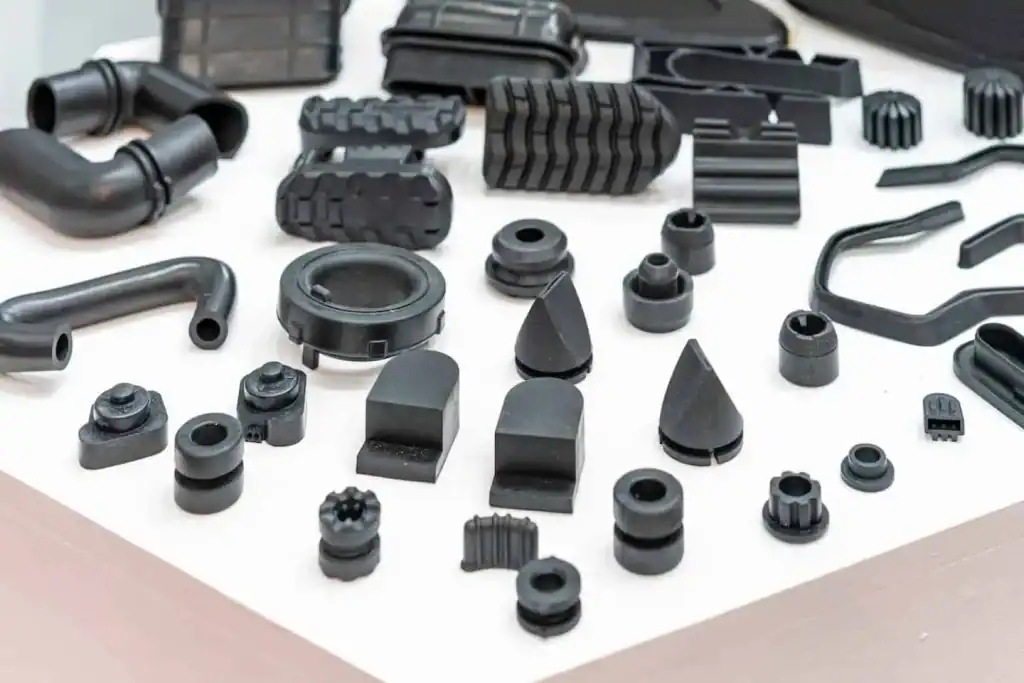
Compression Moulding Applications

Electronics

Medicine & Dent

Consumer Goods
Compression Moulding Material Selection
Silicone
Silicone is a synthetic rubber that is widely used in many industries thanks to its various properties. It is heat-resistant, flexible, and waterproof, making it ideal for use in a wide range of applications.
It is also non-toxic and hypoallergenic, making it safe for use in many products, including those that come into contact with the skin.
Custom material
Compression Moulding Finishing Options
Standard finish
No secondary polishing or grinding. The part will have tooling marks.
Custom finish
Why SYR Is The Right Partner for Your Moulding Projects




Compression Moulding Fundamentals
What is compression moulding?
Compression moulding is one of the most widely used plastic moulding manufacturing techniques. Like injection moulding, compression moulding is an economical, time-tested solution for plastic fabrication.
It involves putting preheated plastic material, usually referred to as charge, on a heated open mould cavity and compressing it to form the final shape of the product.
How does compression moulding work?
- Raw materials include resins in the form of pellets, powder, or preforms. This charge material is usually plastic or composite, and is often preheated and placed into a heated mould cavity.
- The matching half mould or top plug is closed using a hydraulic press.
- This motion creates vertical compression and during this time, the pressure forces the plasticized charge to fill the mould evenly, creating a uniform part structure.
- The mould is kept closed and the high temperature cures the charge material into the final shape and chemistry.
- Once the curing reaction is complete, the upper mould is lifted, and the final product is removed.
Why would you choose compression moulding over injection moulding?