 Materials Library
 Articles
 E-Books & Guides
 Manufacturing Stories & Cases
 Webinars
 Guides & Tools
Fused Deposition Modeling (FDM) Services Online
- Over 50 Different Materials
- Manufacturing From 8 Business Days
Start A New 3D Printing Quote
STEP | STP | SLDPRT | STL | IPT | 3DXML | CATPART | PTC | PRT | SAT



FDM 3D Printing Services
Fused Deposition Modeling (FDM) is a 3D printing technology widely known for its great material selection, accuracy, possibility to print large parts, and competitive cost. FDM parts are great for end-use, low-volume production, for rapid prototyping. FDM 3D prints usually do not require any post-processing.
Try SYR Out Now In Just A Few Steps

Upload Your CAD Files
Multiple designs for different parts can be imported at the same time to produce a single quote. In less than a minute, a detailed cost estimation appears on the screen.

Choose the Process
First, select the manufacturing process you require. You can then choose from over 150 materials and from a wide range of finishes and certifications.

Order Your Parts Online
Once you have selected the required options, all you need to do is confirm the order and pay for it on the secure payment platform. Your design will be analysed by engineers.

Receive Your Parts
Within a short amount of time, you will receive the parts you ordered directly to your shipping address. You can track your package at any time in your personal account.
Advantages of FDM with SYR


FDM 3D Printing Materials
Rigid Plastics
Finishing Options
As-printed
As-printed
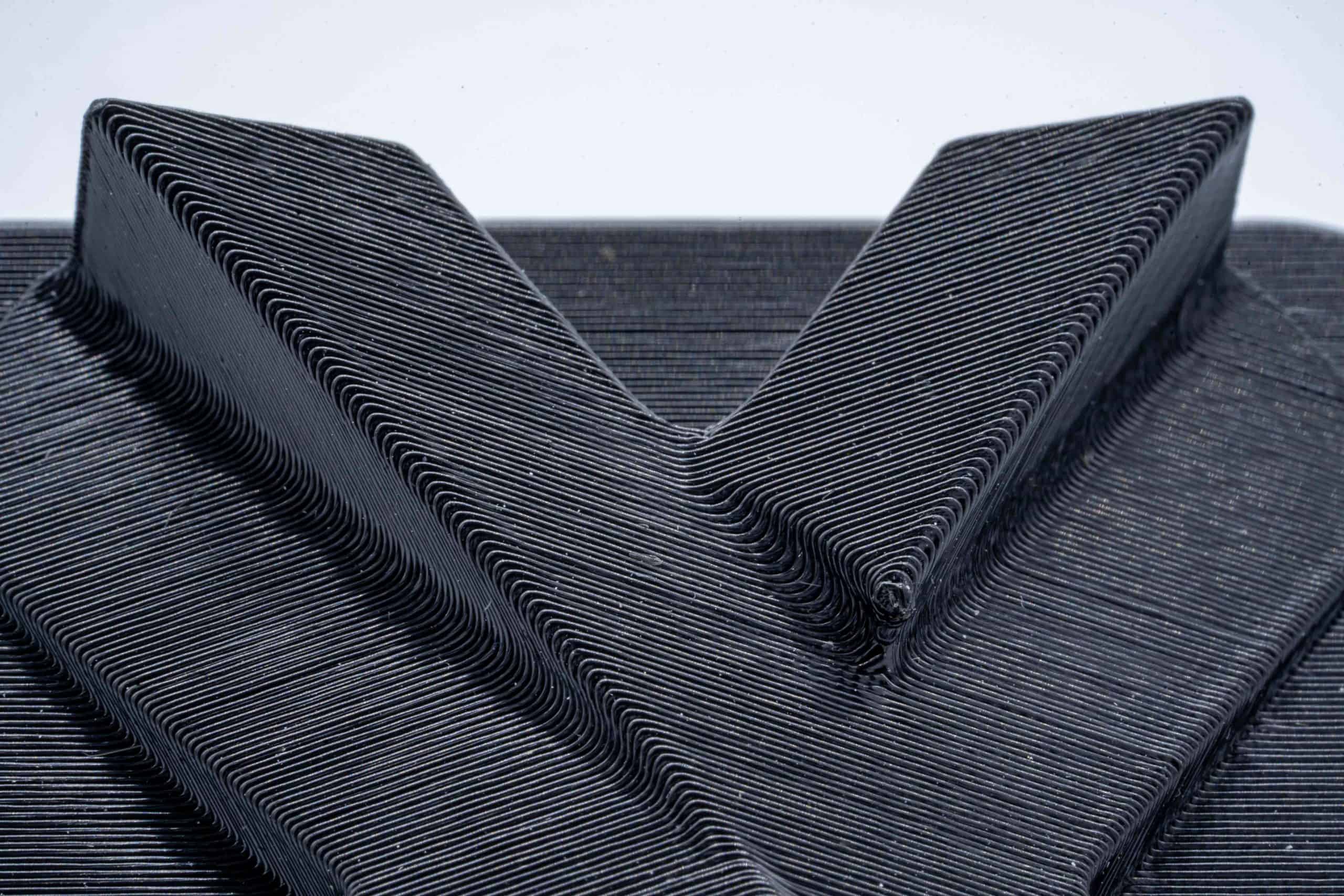
FDM parts are built with support material that is removed during post-processing.

Custom
Custom
If you select a custom finish in the Instant Quoting Engine it will require manual review. Manual quoting usually 1-2 business days.
Gallery of FDM parts


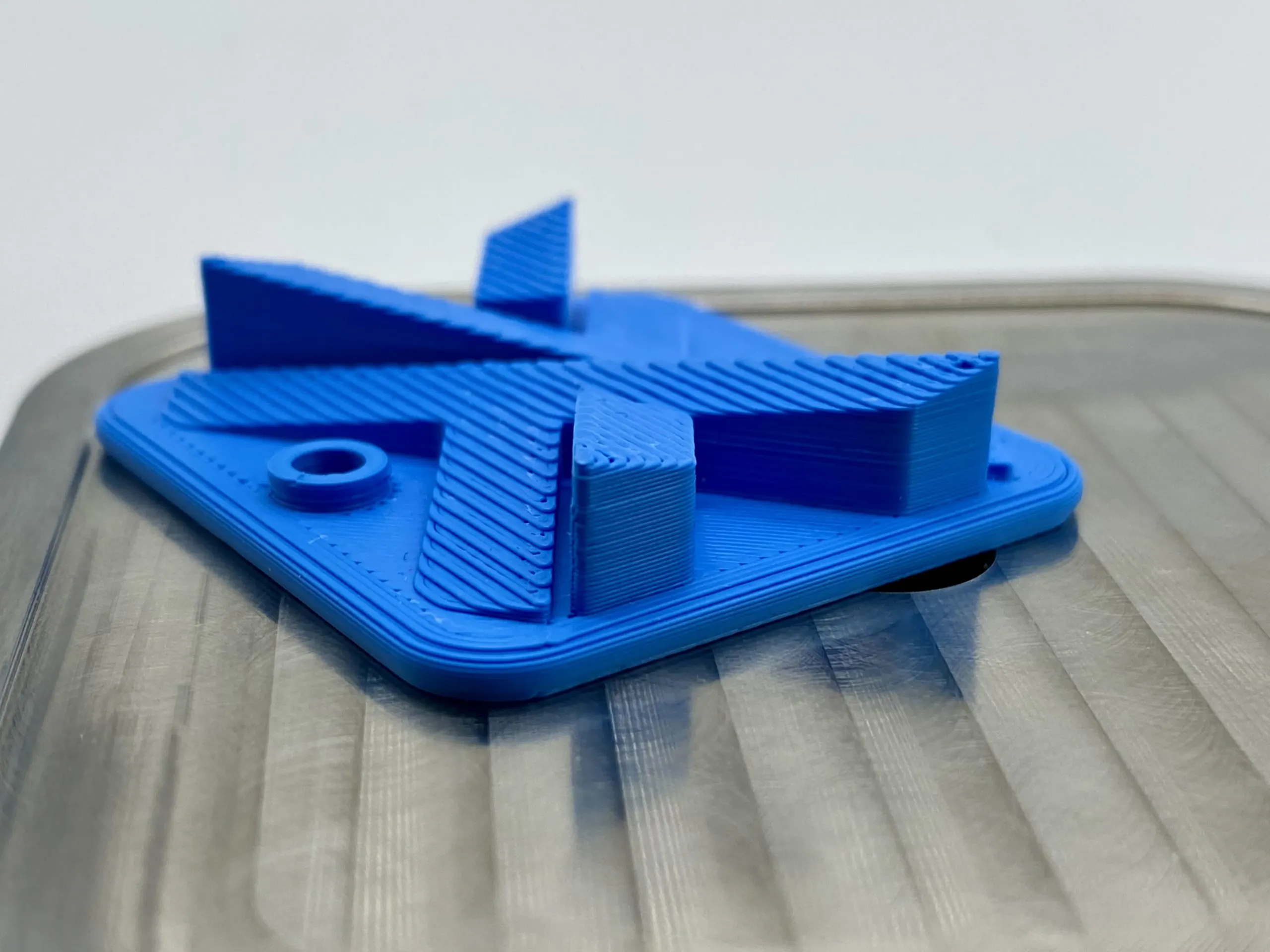
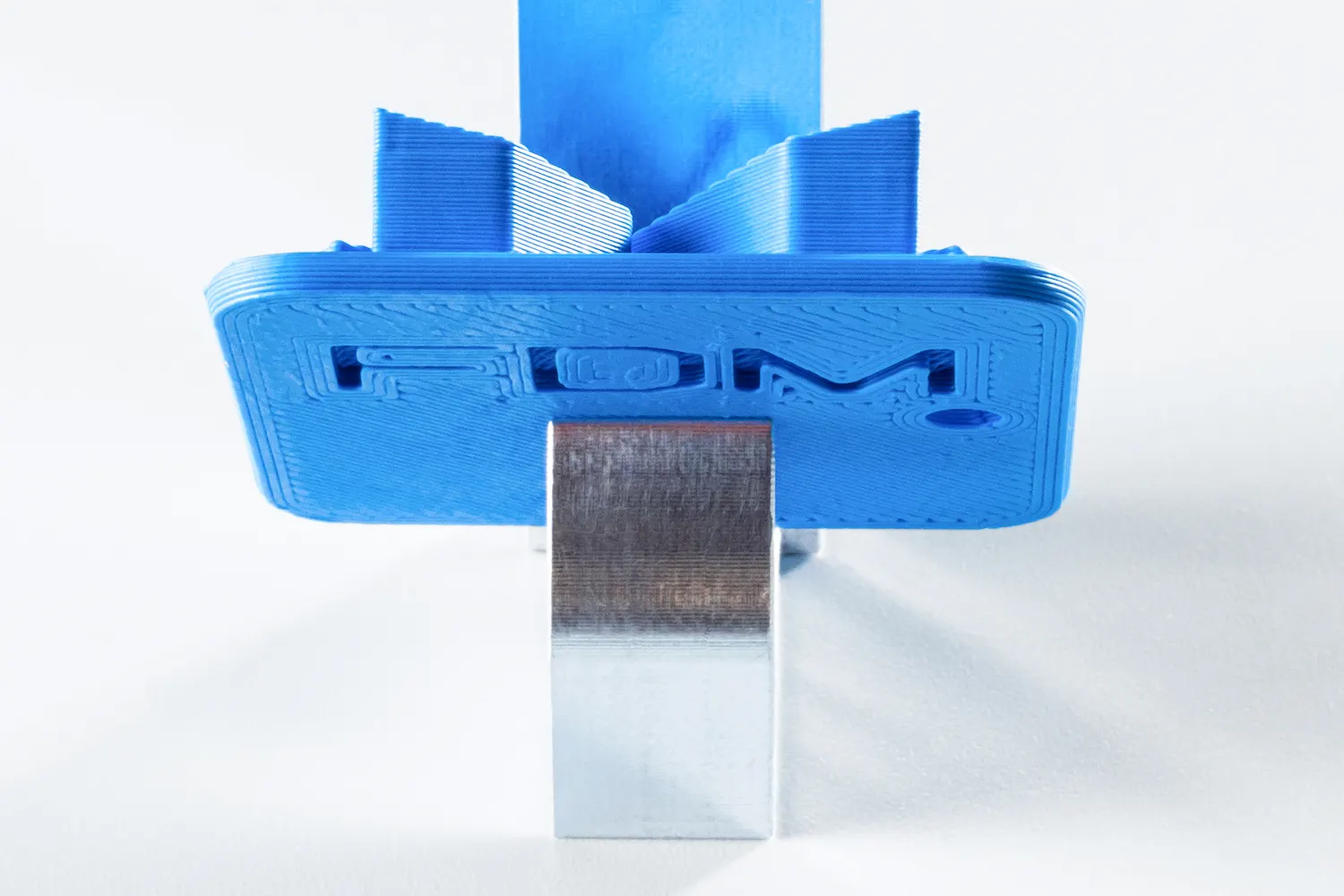
FDM Infill Options
Fused Deposition Modeling (FDM) is a 3D printing technology that builds a part layer by layer by depositing heated thermoplastic along an extrusion path. In this process, there are several different ways the interior areas of a part can be interpreted when the part is built. Infill describes how those interior areas of a part should be filled in.
SYR offers three types of infill options:
- Ultralight FDM infill: Up to 20% infill density. Ultralight infill parts are filled with a single zig-zag pattern. This is the lightest and least expensive infill option
- Light FDM infill: 20-50% infill density. Light infill parts are filled with a double cross-hatch pattern. This option provides increased rigidity and is lighter than a complete solid infill
- Solid FDM infill: 50-80% infill density. Solid infill parts are filled for a higher density. This is the heaviest and more expensive option but offers the highest strength

FDM Layer Thickness Options
FDM Layer Thickness Options
Layer thickness refers to the height of each layer added during the additive manufacturing or 3D printing procedure, where multiple layers are stacked upon one another to create the final product. For FDM, choosing your layer thickness is a critical parameter that directly impacts a part’s visual appearance, properties and printing time.
SYR offers three layer thicknesses:
- 100 µm (Fine)
- 200 µm (Standard)
- 300 µm (Economy)

Pros & Cons of FDM 3D Printing
| Advantages | Considerations |
|---|---|
| Large platform: you can print very large parts using this technology | Needs support elements, which can leave undesired marks after removing them |
| A very wide selection of materials and colours: over 40 | Sweats small details |
| Usually do not require any post-processing | Significant layer stepping |
| Fast: SYR can deliver them in just 8 days | Limited scalability |
| Cheap: for non-complex geometries this option might be around 15% cheaper than SLS |
FDM Manufacturing Specifications & Capabilities
| FDM | SLS | HP MJF | SLA | Carbon DLS | DMLS | Polyjet | |
|---|---|---|---|---|---|---|---|
| Lead time | 8 days | 3 days | 3 days | 7 days | 5 days | 10 days | 7 days |
| Build volume | • 350 x 350 x 350 mm (Standard) • 900 x 600 x 900 mm (Industrial) | up to 340 x 340 x 605 mm, but usually, we recommend the maximum size of 320 x 320 x 580 mm | up to 380 x 284 x 380 mm, while we normally recommend the maximum size of 356 x 280 x 356 mm | • 145 × 145 × 185 mm (Standard) • 736 x 635 x 533 mm (Industrial) | up to 119 x 189 x 300 mm. Recommended size: Within 100 x 100 x 150 mm | 400 x 400 x 400 mm | up to 490 mm x 391 mm x 200 mm |
| Layer thickness | ~0.05-0.3 mm | ~0.1 mm and for water-tight parts 1.5 mm, when wall thickness is higher | ~0.08 mm | min 0.02 | ~0.1 mm | 0.02 – 0.08 mm depending on the material | 0.04 mm |
| Minimum feature size | up to 0.2 mm | 0.5 mm | 0.5 mm | 0.2 mm | 0.5 mm | 0.75 mm for cosmetic features, 1.5 mm for structural features | 1.2 mm or greater for rigid. 2 mm or greater for rubber-like |
| Tolerance | ±0,5% (±0,5 mm) (Standard & Industrial) | ±0.3% (± 0.3 mm) | ±0.3% (± 0.2 mm) | • ±0,5% (±0,2 mm) (Standard) • ±0,5% (±0,15 mm) (Industrial) | ±0.1% (±0.1 mm). However, tolerances are not guaranteed on the first attempt at a new design. | ±0.2% (±0.1 – 0.2 mm) | ±0.1 mm for the first dozens of mm is typical, plus ±0.05 mm for every mm thereafter |
| Description | Widely known for a great material selection, accuracy, and possibility to print large parts | One of the most popular and inexpensive technologies for industrial 3D printing | A technology that produces highly accurate and durable parts at fast speeds, especially compared to other powder bed fusion technologies | A technology that produces extremely accurate and high-resolution parts | A breakthrough technology that uses digital light projection, programmable liquid resins, and oxygen-permeable optics to produce parts with exceptional durability, resolution, and surface finish | Metal 3D printing technology. Selectively fuses a fine metal powder in aluminium or stainless steel | Polyjet is a rigid photopolymer 3D printing technology that produces high-detailed models |
| Support structures | Yes, for overhanging features | No | No | Yes, for overhanging features | Yes, for overhanging features | Yes, for overhanging features | Yes, for overhanging features |
| Read more about FDM | Read more about SLS | Read more about HP MJF | Read more about SLA | Read more about Carbon DLS | Read more about DMLS | Read more about Polyjet |